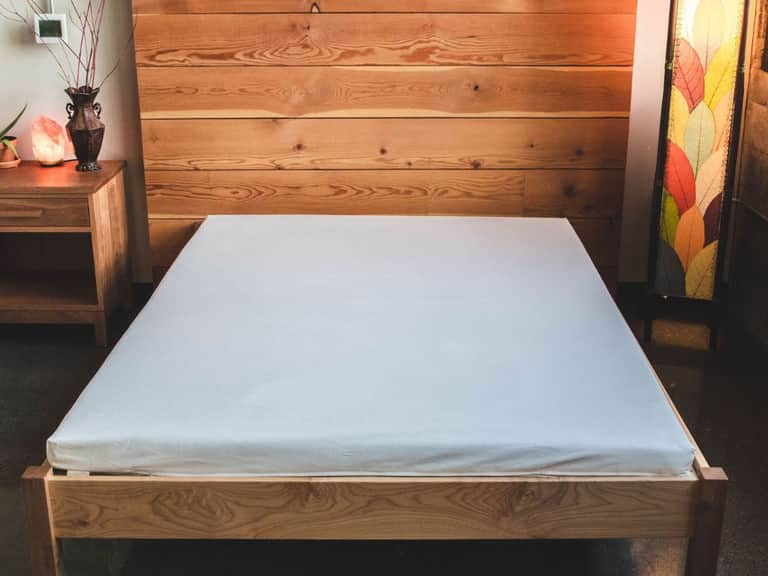
Latex mattress toppers add a responsive comfort layer to an existing mattress, helping adjust its surface feel without replacing the full sleep system. Natural latex is valued for its springy support and ability to cushion pressure points. Topper thickness, firmness, and construction influence how it feels and fits different sleep preferences.
Latex can be made from natural rubber tree sap or produced with blended materials, so composition labels help clarify what a topper contains. Its resilient structure generally returns to shape after pressure is removed, while ventilation channels or pinholes may encourage airflow. These characteristics can be relevant for people comparing comfort, support, and temperature preferences.
The Natural Wool & Latex Shikibuton combines latex with wool in a traditional floor-oriented sleeping format. Latex provides a buoyant, supportive layer, while wool contributes a soft, insulating surface and can help moderate moisture. Its compact design may suit minimalist bedrooms or adaptable sleeping arrangements, though it differs from a conventional mattress topper.
When evaluating bedding, consider how latex layers work with pillows, comforters, and the underlying mattress. Compatibility also matters for adjustable beds, since a flexible topper must bend with the base. In nursery settings, sleep surfaces should follow applicable safety guidance; adult bedding components are not substitutes for a purpose-designed infant sleep surface.
Care and fit affect the performance of latex bedding over time. Check product guidance for ventilation, spot cleaning, cover removal, and exposure to sunlight or moisture, as materials vary. Measure the mattress or sleeping platform before choosing a layer, and consider firmness, thickness, movement, and the intended use of the sleep space.
 Mattress Toppers